

Ilija Moric [1]
University of Montenegro
Faculty of Tourism and Hotel Management
Kotor, Montenegro
Abstract: This paper explores the role of higher education in sustainable development of food tourism via effective experiences design and skill development in the context of new emerging trends in contemporary tourism development. Limited studies are still attempting to discover the interaction between higher tourism education and contemporary food tourism development. In line with that, this paper discusses the relationship between trends, skill needs, and food tourism experiences on one side and education on the other. Relying on a multi-method approach including second data research, participatory observations and interviews, this paper offers a multi-perspectival analysis of the complex interactions between education and food tourism experiences in Montenegro. Although tourism infrastructure and facilities could be developed in a relatively short period, preparing human resources to work professionally in the tourism industry could be a long-term process. Key findings indicate the important role of education in overcoming the gap between skill needs and visitor expectations, how to design food tourism experiences that meet visitor expectations, and fostering sustainable food tourism development through higher education.
Keywords: food tourism, education, skill needs, experiences, Montenegro
INTRODUCTION
According to UNWTO (2017) and the 2nd Global Report on Food Tourism, the following global trends are important and related to market demand: the majority (87%) of responding organisations believe that gastronomy and food are a distinctive and strategic element in defining the image and brand of the destination; gastronomy ranked as the third main reason why tourists decide to visit a destination; approximately 70% of respondents have already targeted gastronomy tourists as a market segment; the potential of gastronomy to enhance the livelihood of the local community has been valued at 8.53 points out of 10; 80.5% of destinations rated gastronomy tourism potential with highest points (9‒10 points). Contemporary tourism, as well as food tourism, is facing many new problems, especially in the sense of responsible commercialisation, nature protection, climate changes and adaptation, efficient preservation, opportunities for new ideas, socio-cultural importance and identity, etc., followed by growing necessity for employing graduate students from higher education institutions (Sigala 2021; Peacock & Ladkin 2002). With the more intensive introduction of business opportunities, food tourism could attract locals, especially talented and young entrepreneurs, into the local food tourism industry (Hjalager 2003). Anyway, these aspects have attracted limited attention in Montenegro, and therefore this gap has to be examined and explained.
In line with the mentioned, this paper explores the role of higher education in sustainable development of food tourism via effective experiences design and skill development in the context of new emerging trends in contemporary tourism development. Limited studies are still attempting to discover the interaction between higher tourism education and contemporary food tourism development. In line with that, this paper discusses
the relationship between trends, skill needs, and food tourism experiences on one side and education on the other. Although theoretical background is quite extensive, local experiences are diverse and incomparable due to different economic, social, political and other determinants.
This paper broadens existing research in two ways. First, findings will include the influence of the local and rural character of the food tourism on educational needs. Second, this paper examines the structure of knowledge, skills, and technology needs for more efficient and effective food experience development. The remainder of this paper is organized as follows. Section 2 reviews the literature related to the conceptual basics of food tourism, education and their interrelation. Section 3 presents methodology. Results and discussion are provided in section 4, while conclusions and suggestions for future development are given in section 5.
LITERATURE REVIEW
Undoubtedly, tourism and hospitality represent one of the key academic fields in higher education and research (Kim & Miyoung 2021). This academic position is additionally supported by the emerging importance of social, environmental and economic sustainability research and universities’ contribution to economic development, innovation, and social well-being. So-called “the third mission” of higher education institutions (HEI) includes activities beyond traditional teaching and research missions, shedding light on the university’s role in serving society. This could represent a new platform and approach in which the tourism academic sector’s capacities are reviewed and evaluated via collaboration and contribution to destinations and development (Rinaldi, Cavicchi & Robinson 2022). These aspects and roles of HEIs should be further examined in the sector of food tourism.
In the context of business development on one side, and understanding visitor behaviour and motivation on the other, it is important to discuss key activities of food travellers. World Tourism Organisation (UNWTO 2017) suggests following list of key experiences and programmes in food tourism: visiting a cooking school, participating in a food tour, shopping in a local grocery or gourmet store, joining tours at food or beverage factories, participating in wine/beer/spirits tasting, eating out in unique or memorable foodservice establishments, etc. Diversity of food tourism experiences is followed by a fundamental shift in tourism education, which is necessary to respond to global challenges impacting tourism (e. g. climate changes, food responsibility, poverty reduction, regional development, etc.). Hence, the need for developing tourism education with an academic perspective is experiencing growth, especially in the last decade. Although it is often criticised for its lack of operative knowledge and training, academic education is necessary in understanding conceptual aspects of tourism and its changing nature, in a way that a tourism degree may answer these challenges in context of adaptability and problem solving capacities (Kastenholz & Werner 2022). This leads to another quite common challenge, such as the insufficient number of professionals with the necessary academic interdisciplinary, creative, innovative and entrepreneurial skills. This could be overcome with constant support (e. g., financial, educational, and technical) to different groups of experts and locals interested in the development of real, market-oriented, long-term sustainable tourism businesses.
As already mentioned, it is widely discussed that tourism degrees do not meet the needs of today’s students, especially because of a major lack of sustainability issues (Mínguez, Martínez-Hernández & Yubero 2021). On the other side, contemporary tourism requires implementation of modern
concepts in business and tourism experience development. For example, co-creation represents a useful tool for generation of immersive and involving experiences of services, places, and cultures, that motivate and stimulate visitor engagement in a creative and meaningful way (Kastenholz & Werner 2022). In this way, successful local professionals in food tourism represent efficient intermediaries among the rest of the community, especially in the context of cultural habits, respect, and confidence expansion. For example, the role of local, professional, and well-trained tour guides is widely recognised as important due to their communication effect and ‘insider’ impact on tourists (Salazar 2012). However, these skilled and educated individuals are an important link between the local community and the cultural and food tourism industry.
Tourism education, research and community contribution are affected by various factors, local and global, fostering the constant change where HEIs have to continuously question and reassess the relevance of the courses and competences provided by academic programmes, especially in its conceptual and theoretical aspects (Hall 2024). So, this research aims to highlight the need for developing contemporary and market-oriented education and curricula for sustainable food tourism development by taking into consideration the “real world” conditions of the tourism market and business issues (e. g. using mentoring, job-related education, learning by doing etc.). Also, food tourism is a very specific sector, with obvious importance of interdisciplinary knowledge and transversal or soft skills which go beyond conventional knowledge and help to cope with dynamic and changing environment.
METHODOLOGY
Using the significant literature resources, existing secondary data from Montenegrin government bodies, higher educational institutions, and foreign development agencies (e. g., Ministry of Culture, Ministry of Tourism), and relevant international organisations (UNWTO, UNESCO), the research is focused on educational needs in food tourism as an important and critical factor of success, especially for entrepreneurs and innovators in this sector. Using these secondary data, combined with primary data obtained by fieldwork conducted during 2024 at food tourism sites in Montenegro (e. g. Boka Kotorska, Cetinje, Budva, Kolašin, Žabljak and Podgorica), the paper investigates the key challenges (e. g., status quo, educational needs, business opportunities, future perspectives, etc.) associated with the role of education in development processes. Relying on a multi-method approach including second data research, participatory observations and interviews, this paper offers a multi-perspectival analysis of the complex interactions between education and food tourism experiences in Montenegro. Moreover, the paper explores three important aspects of educational needs, such as knowledge needs, skill needs and technology needs.
RESULTS AND DISCUSSION
According to secondary data sources and methodological approach, several key features could be pointed out related to food tourism in Montenegro:
Food tourism in rural areas has its specific characteristics, primarily due to a different level of accessibility compared to urban experiences, with implications in the context of price, uniqueness, authenticity and personalisation.
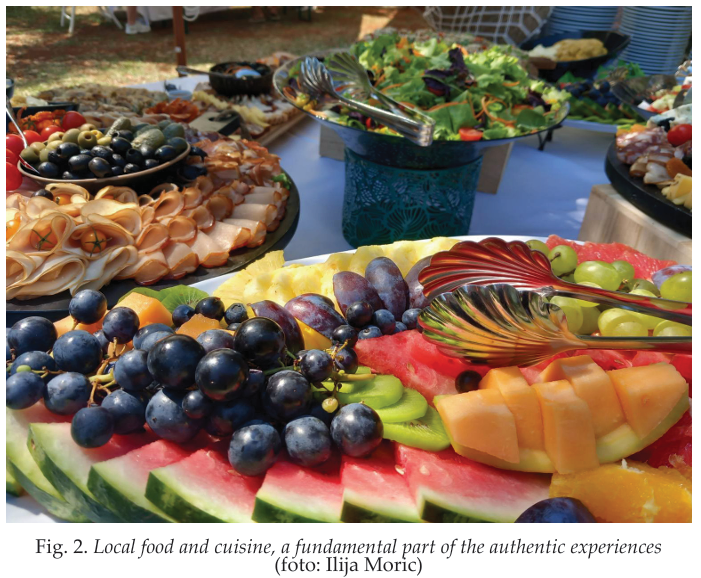
Short value chains manifested in the use of local food in the dining experience generates several benefits for local farmers, operators, visitors and the environment.
Food, as a cultural market of the site, plays an important role in the visibility of the small destinations, especially rural, via unique storytelling, branding and positioning.
On the other side, interesting results should be pointed out linked with education and usual mistakes in solving business problems in Montenegro, such as:
- Lack of scenario/plan of the tour followed by intensive improvisation;
- “Me too” concept and imitations, followed by fear from innovations and lack of authenticity in tour creation;
- “Experience for ourselves” with obvious ignorance of the customer needs;
- Isolation of the host and his/her story by dominant interpretation only by tour guide;
- Lack of communication/interpretation or communication “when we want”;
- Lack of service personalisation;
- Experience for one use only, etc.
Mentioned facts imply that professional education and training are important tools in order to improve experience, hospitality and general tourism competencies. Otherwise, insufficient and/or wrong education and training could provoke barriers to the provision of authentic food experience as well as social-cultural exchange. On the other hand, contemporary tourism and hospitality education methods have to generate personalized learning experiences and provide necessary skills and competences of students. In line with previously mentioned key trends, treats and opportunities linked with the food tourism and education, several strategic and operational management issues have to be discussed (Tab. 1).
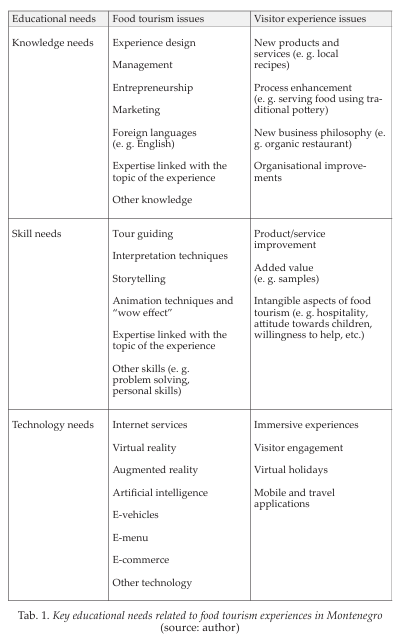
Visitor experiences and knowledge needs: Research points out several issues that provide necessary preconditions for delivery of a superior food experience. Knowledge linked with visitor experience design is required to maintain “experience” character of the product or service. On the other side, marketing principles should be implemented, especially the fact that the customer needs have to be the focal point of the offer creation. Understanding gained through learning or experience related to management in the food sector and tourism is the next important step, together with leadership knowledge, that could obtain efficient planning, organisation and control of the business endeavour. Delivery of the food experiences has to be based on the communication, where knowledge of foreign languages (e. g. English) is often a limitation factor for sustainable development in this sector, especially in rural areas. Furthermore, efficient communication is also based on the expertise of the specific area (e. g. olive growing, winemaking, organic production) and other in-depth knowledge and information learned through experience and linked with the topic of the experience (e. g. cuisine, health, horticulture, wellbeing, etc.).
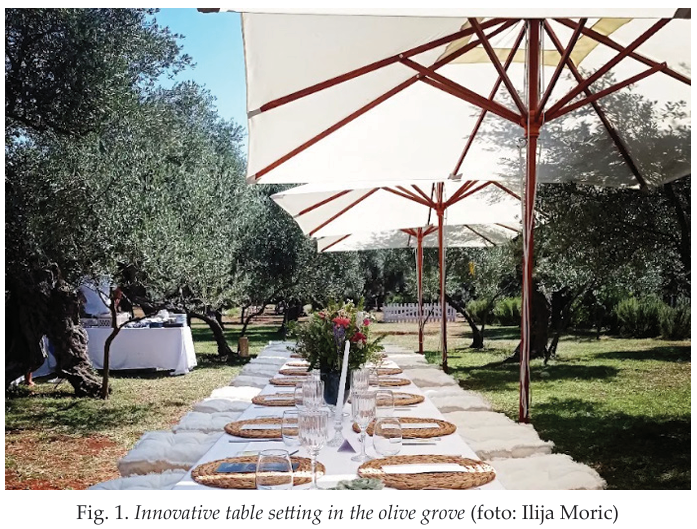
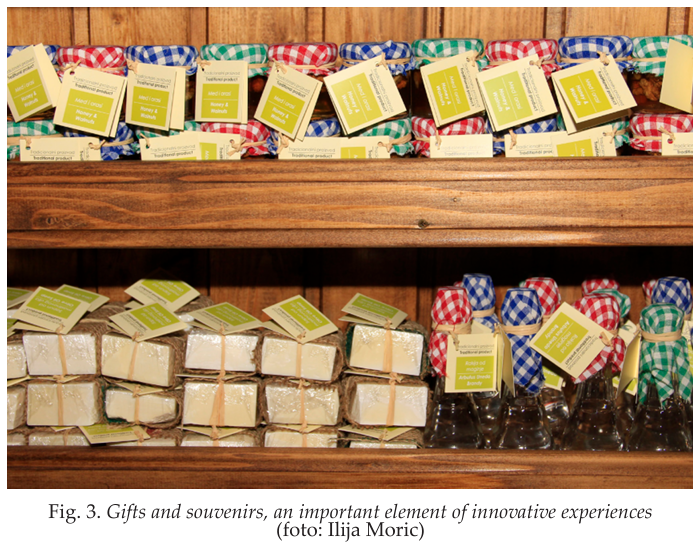
Visitor experiences and skill needs: Key tour guiding skills or techniques include strong communication skills, in-depth knowledge, creativity and authentic passion for sharing stories and experiences with guests. Among techniques that provide better tour guiding experience in food tourism, storytelling is recognised as the interactive and creative technique of using ideas, words, stories and images that encourage visitor emotions, senses and imagination. Another interesting communication and animation technique is “WOW effect” that includes actions and processes where visitor expectations are being exceeded in positive and surprising ways (e. g. visitor engagement, impressive opening, gifts, etc.). Final aim of this quality of being able to impress others, is to create loyalty by generating added value that surpasses conventional price-value relationship (e. g. secret recipes, new ingredients, cooking tricks etc.). Other skills linked with the topic of the experience could be different abilities, especially important during technical aspects of the experience (e. g. harvest, planting, cooking, food serving, table decoration, etc.).
Visitor experience and technology: Technology as equipment developed from the application of scientific knowledge represents a significant tool for experience delivery, which begins with different action before a visitor arrives in the destination (pre-arrival actions), and continues further after departure (post-stay actions). Different internet services have been in use for the last three decades, offering convenience and connectivity in various forms between host and visitors (e. g. e-mail facilities, web facilities, blogs, and social networks). Key benefit is seen in various forms of interactions significant for the quality of the experience design process. Digital age is also characterised by contemporary interaction tools such as virtual reality (VR) and augmented reality (AR), kinds of an immersive technology that creates simulations of a three-dimensional image or environment that can be interacted by a visitor using special equipment (e. g. goggles, helmet, glasses). This technology provides users with a profound sense of presence and the ability to interact with virtual objects and surroundings. Furthermore, artificial intelligence (AI) as computer systems able to perform tasks normally requiring human intelligence (e. g. speech, analysis, actions, decision-making, solutions, new content creation), is widely used in tourism, significantly elevating the visitor experience by making interactions more personalized and immersive. Apart from IT technology, other advanced techniques and types of equipment are also involved in the tourism product creation such as e-vehicles, digital menu, e-shopping, etc.
CONCLUSIONS
This paper discusses the most relevant issues related to food tourism and educational needs, especially the role of higher education in sustainable development of food tourism via effective experiences design and skill development in the context of new emerging trends in contemporary tourism development. Limited studies are still attempting to discover the interaction between higher tourism education and contemporary food tourism development. In line with that, this paper discusses the relationship between trends, skill needs and food tourism experiences on one side and education on the other. Although tourism infrastructure and facilities could be developed in a relatively short period, preparing human resources to work professionally in the tourism industry could be a (life-)long process. Key findings indicate the important role of education in overcoming the gap between skill needs and visitor expectations, how to design food tourism experiences that meet visitor expectations, and how higher education can support further sustainable food tourism development. Also, findings indicate the need for a systemic, dynamic and innovative framework for sustainable and highly impactful food tourism, which policymakers and operators might use to strengthen competitiveness and development at the food tourism sites. This theoretical framework needs effective operationalization where visitor experience is primarily dependent on competences and technology obtained via contemporary educational programmes and trainings. In line with this, further and future research as well as educational and training needs should cover the following key and critical aspects of experience design in food tourism: thematic character of the experience, specialisation and diversification of the experiences, focus on reality and authenticity, interactivity, personalisation, seasonal resilience, repeatability, modularity, different packaging approaches and scenario/itinerary presence.
REFERENCES
Literature Hall, Michael C. 2024. “Tourism: Conceptualisations, disciplinarity, institutions and issues”. The Wiley Blackwell Companion to Tourism: 1‒13.
Hjalager, Anne-Mette. 2003. “Global Tourism Careers? Opportunities and Dilemmas Facing Higher Education in Tourism”. Journal of Hospitality, Leisure, Sport and Tourism Education 2 (2): 26‒37.
Kastenholz, Elisabeth. & Werner, Gro nau. 2022. “Enhancing competences for co-creating appealing and mea ningful cultural heritage experiences in tourism”. Journal of Hospitality & Tourism Research 46.8: 1519‒1544. Kim, Hyun Jeong, & Miyoung Jeong. 2021. “What has happened and what will drive changes in hospitality and tourism education?”. Journal of Hospi tality & Tourism Research 45.5: 942‒944. Liang, Austin Rong-Da, Teng-Yuan Hsi-ao, Dun-Ji Chen, & Jie-Heng Lin. 2021. “Agritourism: Experience design, activities, and revisit intention.” Tourism Review 76 (5): 1181‒1196.
Mínguez, Carmen, Carlos Martínez-Hernández, & Claudia Yubero. 2021. “Higher education and the sustainable tourism pedagogy: Are tourism students ready to lead change in the post pandemic era?.” Journal of Hospi tality, Leisure, Sport & Tourism Educa tion 29: 100329. OECD. 2012. Food and the Tourism Experience: The OECD-Korea Workshop. OECD Studies on Tourism: OECD Publishing.
Okumus, Bendegul. 2021. “Food tourism research: a perspective article.” Tourism Review 76.1: 38‒42.
Peacock, Nicola & Adele Ladkin. 2002. “Exploring Relationships between Higher Education and Industry: A Case Study of a University and the Local Tourism Industry”. Industry and Higher Education 16 (6): 393‒401.
Richards, Greg. 2021. Rethinking cultural tourism. Edward Elgar Publishing.
Rinaldi, Chiara, Cavicchi, Alessio & Robinson, Richard N. S. 2022. “University contributions to co-creating sustainable tourism destinations”. Journal of Sustainable Tourism 30.9: 2144‒ ‒2166.
Salazar, Noel, B. 2012. “Community-based Cultural Tourism: Issues, Threats and Opportunities”. Journal of Sustainable Tourism 20 (1): 9–22.
Sigala, Marianna. 2021. “Rethinking of Tourism and Hospitality Education When Nothing Is Normal: Restart, Recover, or Rebuild”. Journal of Hospitality & Tourism Research 45 (5): 920‒923.
Tavitiyaman, Pimtong, Bruce Tsui, & Peggy Mei Lan Ng. 2025. “Effect of hospitality and tourism students’ perceived skills on career adaptability and perceived employability”. Journal of Hospitality & Tourism Education 37.1: 43‒54.
Internet izvori
UNWTO. 2017. “2nd Global Report on Food Tourism”. United Nations World Tourism Organization. https://www. unwto.org (accessed 15. 2. 2025).
NOVI TRENDOVI, POTREBNE VJEŠTINE I RAZVOJ DOŽIVLJAJA U TURIZMU HRANE: PERSPEKTIVA EDUKACIJE
Sažetak: Rad istražuje ulogu visokog obrazovanja u održivom razvoju turizma hrane putem efektivnog dizajna doživljaja i razvoja vještina u kontekstu novih trendova savremenog turizma. Postojeća, iako nedovoljna, istraživanja su usmjerena ka razumijevanju povezanosti visokog obrazovanja u turizmu i savremenog razvoja turizma hrane. U skladu s tim, ovaj rad bavi se među odnosom trendova, potrebnih vještina i doživljaja u turizmu hrane sa jedne i edukacije sa druge strane. Istraživanje se oslanja na više istraživačkih metoda koje uključuju analizu podataka, posmatranje i intervjue, čime pruža višestruki uvid i analizu kompleksne interakcije edukacije i doživljaja turizma hrane u Crnoj Gori. Iako se turistička infra- i suprastruktura mogu razviti u relativnom kraćem periodu, priprema i edukacija zaposlenih za profesionalni rad u turističkoj inudstriji može biti svojevrsni cjeloživotni process. Stoga, ključni nalazi ukazuju na važnost uloge kontinuirane edukacije u prevazilaženju jaza između očekivanja posjetilaca i potrebnih kompetencija, dizajniranja doživljaja koji su u skladu sa potrebama potrošača te podrške visokog obrazovanja daljem održivom razvoju turizma hrane.
Ključne riječi: turizam hrane, edukacija, potrebne vještine, doživljaji, Crna Gora
ENDNOTES
[1] imoric@t-com.me.
SEPARAT RADA
Separat ovog rada (pdf), objavljenog u trećem broju časopisa Konteksti kulture: studije iz humanistike i umjetnosti (2025), možete preuzeti klinom na ovaj link.